
You have a clear choice when you look at RF or CO2 laser tubes. RF laser tubes can last 5 to 7 years. They only need air cooling. CO2 glass tubes need water cooling. They last about 6 to 12 months. RF tubes let you engrave faster. They cost less to run. But RF tubes cost more at first. Laser Feiju explains these differences. They help you pick the tube that fits your budget, use, and future needs.
Principais conclusões
- RF laser tubes work for a longer time, up to 20,000 hours. This makes them a better choice if you want something that lasts, even though they cost more at first.
- CO2 laser tubes cost less when you buy them and are simple to change. This makes them good for people who do hobbies or run small businesses.
- RF tubes can make more detailed engravings and cut things faster. They are best for jobs that need careful work and steady results.
- CO2 tubes need water cooling and need to be checked more often. RF tubes can use air cooling if they are lower power.
- Think about how much money you have, what you want to make, and how good you want your engravings to be before you pick RF or CO2 laser tubes.
RF or CO2 Laser Tube Basics
How RF Laser Tubes Work
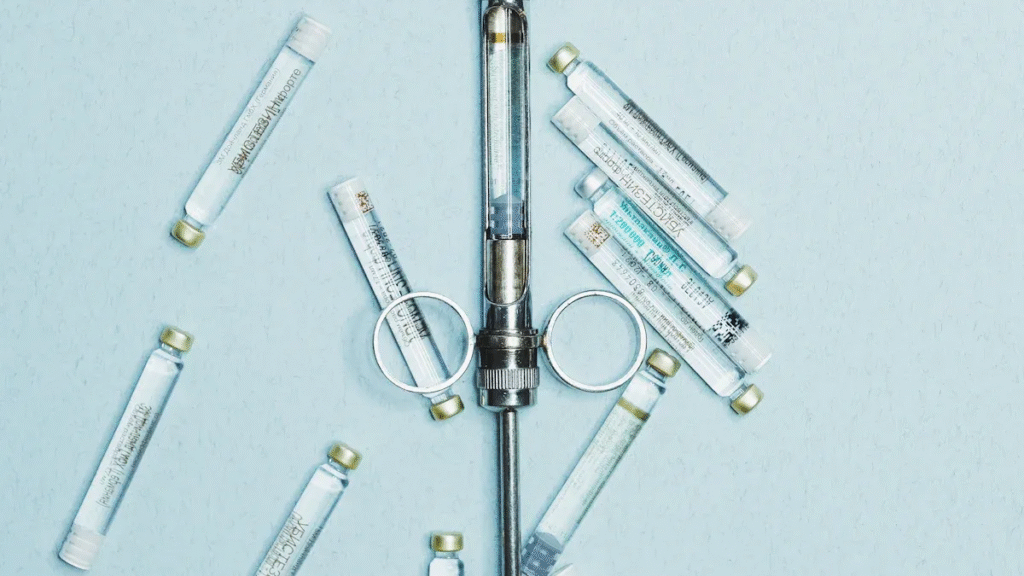
RF laser tubes use radio waves to excite gas. The gas is inside a metal or ceramic chamber. This makes a strong laser beam. You only need air cooling for these tubes. Water chillers are not needed. The tube stays cool and works well for a long time. RF laser tubes give you great beam quality. You can see sharp details and smooth cuts. The collimator helps focus the beam tightly. This is good for fast engraving and precise jobs. RF tubes last a long time, over 20,000 hours. You do not need much maintenance. You can reuse the tube after inflation. The sealed design keeps out dust and water. This makes the tube tough in hard places.
Tip: RF laser tubes are best for jobs needing fine detail, steady results, and little downtime.
| Recurso | Tubos de laser de RF | Tubos de vidro para laser |
|---|---|---|
| Custo | Higher starting price | Lower starting price |
| Cutting Performance | Great cuts, some rough edges | Great cuts |
| Engraving Detail | Smaller spot, more detail | Good for many uses |
| Longevity | Lasts much longer | Shorter life |
How CO2 Laser Tubes Work
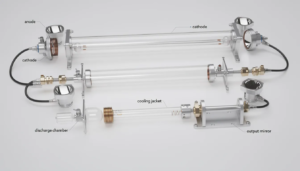
Tubos de laser de vidro CO2 are cheaper for cutting and engraving. They use electricity to excite the CO2 gas in a glass tube. This makes a strong laser beam for many materials. You must use water cooling to keep the tube safe. This means you need extra gear and care.
CO2 glass tubes are great for cutting. You can cut fabric, wood, plastic, and metal. These tubes also help with welding and medical jobs. They work on skin treatments and soft tissue work. You get good engraving for most tasks. The beam spot is bigger than Rthe F tubes. The tube does not last as long, about 6 to 12 months. You need to change the tube more often. The price at first is low.
- CO2 laser tubes are good for hobbyists and small businesses.
- You get easy care and quick replacement.
- These tubes are great for marking, custom designs, and factory work.
You should look at the RF and CO2 laser tube features. Pick the one that fits your needs for work, price, and dependability.
Performance and Quality Comparison
Cutting Speed and Precision
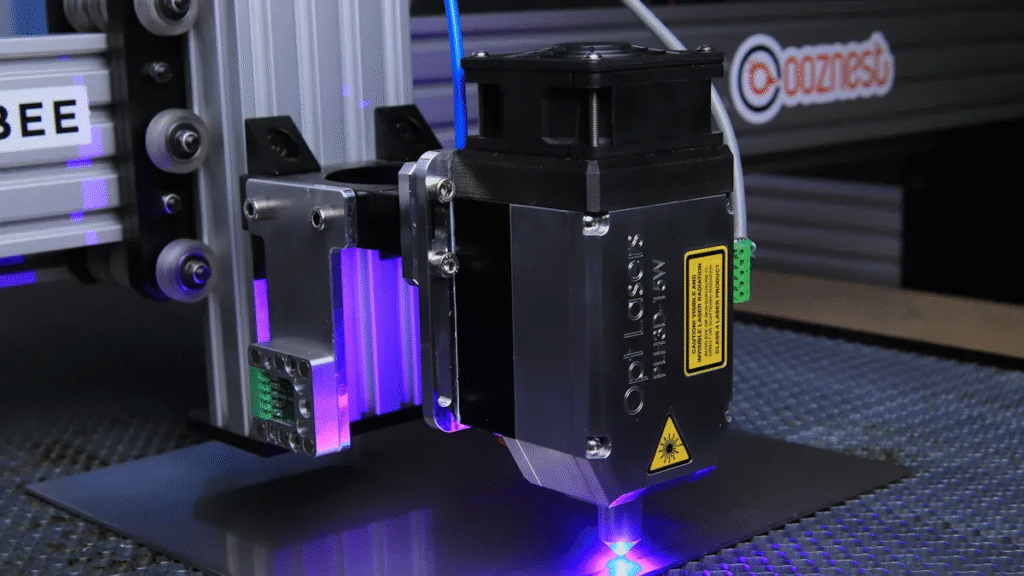
When you look at RF and Tubos de laser de CO2, you see they work differently. RF laser tubes cut fast and keep cuts very accurate. You get sharp edges and the same results each time, even on small projects. CO2 laser tubes also cut well, but sometimes the edges are a bit rough. You should think about what material you use and how you want the finish to look.
Note: RF laser tubes are best for jobs that need exact cuts and the same results every time.
Here is a quick look at some main features:
| Metric | Tubos de laser de RF | CO2 Laser Tubes |
|---|---|---|
| Edge Quality | Very similar, slight roughness in some materials | Very high-quality cuts |
| Cutting Quality | High-quality cuts, slight roughness | High-quality cuts, cost-effective |
| Estabilidade de energia | More stable due to focused energy | Standard stability |
| Longevity | Generally longer lifespan | Standard lifespan |
RF laser tubes give steady power and a smooth beam. This helps you make cuts that are always the same. This is important for factories and jobs that need perfect cuts.
Engraving Detail and Beam Quality
If you want your engraving to look neat and clear, RF laser tubes are a good choice. They make a small spot, so you can engrave tiny designs with great detail. The beam stays strong and focused, so your work looks sharp every time. CO2 laser tubes are good for most engraving, but the spot is bigger. This means you might not get as much detail on small designs.
- RF laser tubes work at high speed for better control.
- They keep working well for a long time.
- These tubes are good for jobs that need tiny details and high accuracy.
| Recurso | Tubos de laser de RF | CO2 Laser Tubes |
|---|---|---|
| Qualidade do feixe | High quality, fine, focused beam | Generally lower quality |
| Beam Stability | Excellent stability | May experience fluctuations |
| Qualidade da gravação | Smaller spot size for finer detail | Larger spot size, less precision |
| Manutenção | Reduced maintenance | Requer manutenção mais frequente |
Tip: Pick RF laser tubes if you want your engraving to always look sharp and you do not want to stop for repairs often.
Choosing between RF and CO2 laser tubes changes how your cuts and engravings turn out. RF tubes give you better detail and steady work. CO2 tubes are good for most jobs and are reliable for everyday use.
Cost and Lifespan
Price Differences
When you compare prices, you see a big gap between RF and CO2 laser tubes. RF laser tubes cost more at first. You pay for advanced technology and longer service. CO2 glass tubes have a lower starting price. Many users choose them for budget projects.
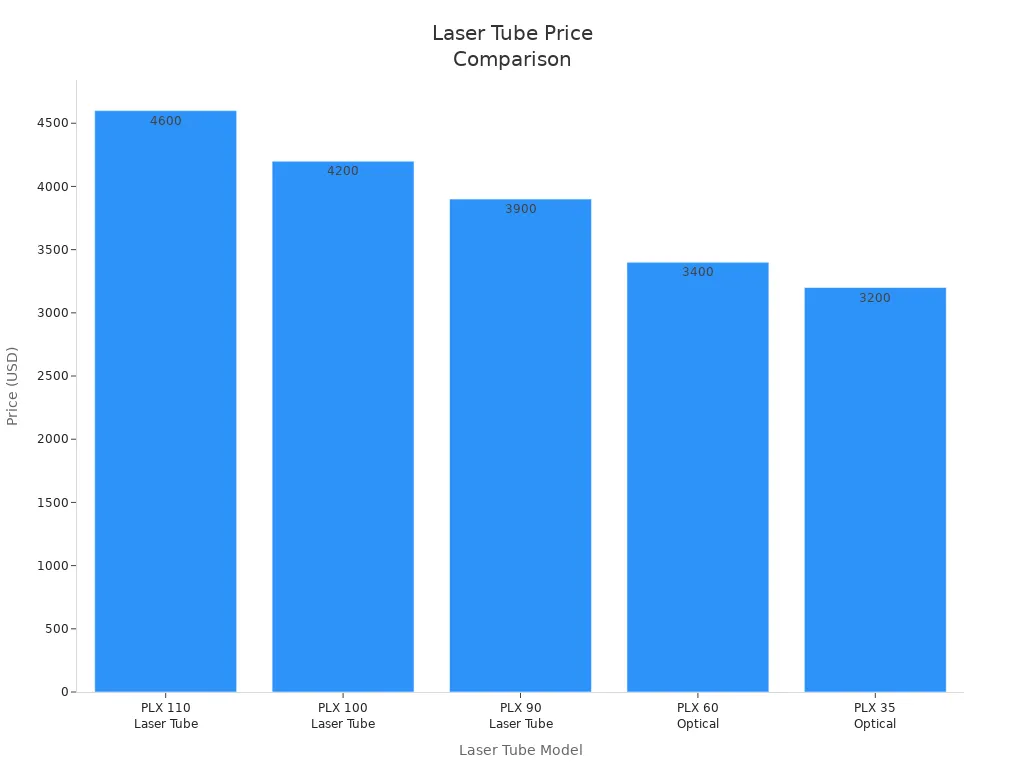
Here is a table showing recent market prices for popular models:
| Modelo | Type | Output Power | Preço | Garantia |
|---|---|---|---|---|
| PLX 110 Laser Tube | RF | 110 Watts | $4,600 | 4 years |
| PLX 100 Laser Tube | RF | 100 Watts | $4,200 | 4 years |
| PLX 90 Laser Tube | RF | 90 Watts | $3,900 | 4 years |
| PLX 60 Optical | RF | 60 Watts | $3,400 | 4 years |
| PLX 35 Optical | RF | 35 Watts | $3,200 | 3 anos |
| OneLaser XF | CO2 DC Tube | N/A | $3,200 | N/A |
| OneLaser XRF | RF CO2 Tube | N/A | $4,000 | N/A |
Tip: If you want a tube for long-term use, consider the higher upfront cost of RF tubes as an investment.
Expected Lifespan
You need to think about how long each tube will last. RF laser tubes work for many years. Most models run for 10,000 to 20,000 hours. You get about six years of service. CO2 glass tubes have a shorter lifespan. They last for 5,000 to 8,000 hours. You may need to replace them every year.
Here is a table to help you compare:
| Tipo de laser | Expected Lifespan (hours) | Average Service Life (years) |
|---|---|---|
| Tubos de laser de RF | 10,000 – 20,000 | 6 |
| CO2 Laser Tubes | 5,000 – 8,000 | N/A |
Note: You save money on replacements and downtime with RF tubes. CO2 tubes work well for short-term projects or if you want to keep costs low.
When you choose an RF or CO2 laser tube, look at both price and lifespan. You get more years and less maintenance with RF tubes. CO2 tubes offer a lower price and easy replacement. Your choice depends on your budget and how often you use your machine.
Cooling and Reliability
Cooling Needs
It is important to keep your laser tube cool. This helps it work well and last longer. RF laser tubes let you pick how to cool them. Low-watt RF tubes use air cooling. Fans and heatsinks help move heat away. If you use a high-watt RF tube, you might need resfriamento de água. This keeps the tube safe during long jobs.
CO2 glass laser tubes always need water cooling. You must use the water system every time you run the laser. Use clean distilled water to stop minerals from building up. Keep the water between 60 and 70 degrees Fahrenheit. If the water gets too hot, the tube can lose power or break early.
- RF tubes use air cooling for low power and water cooling for alta power.
- CO2 tubes always need water cooling, use distilled water, and keep the water cool.
Tip: Check your cooling system often. Clean water and good airflow help your laser tube last longer.
Reliability in Different Environments
You want your laser tube to work well in tough places. RF laser tubes are very strong. Their sealed design keeps out dust and water. You can use them in shops with lots of dust or moisture. RF tubes handle temperature changes and keep working without many problems.
CO2 glass tubes are more sensitive to their surroundings. They do not do well with dust, water, or big temperature changes. You might see more problems if you use them in harsh places.
| Type of Tube | Durabilidade | Sensitivity to Environmental Factors |
|---|---|---|
| RF Tubes | Alta | Low (resistant to dust and humidity) |
| Glass Tubes | Moderado | High (sensitive to temperature and moisture) |
RF tubes need less care, but it is harder and cost more. CO2 tubes need more care, but it is easier and cheaper.
| Tipo de tubo de laser | Maintenance Frequency | Maintenance Complexity | Custo |
|---|---|---|---|
| Tubos de laser de RF | Less frequent | Complex | Costly |
| Glass CO2 Tubes | More frequent | Simpler | Cheaper |
Note: Pick RF tubes if you need strong performance in hard places. Choose CO2 tubes for easy care in clean and steady spaces.
RF or CO2 Laser Tube: Which Is Best?
Pros and Cons Overview
When you look at RF and CO2 laser tubes, you notice big differences. The price, how well they work, and how often you fix them are not the same. You should think about these things before you pick a tube.
Main Advantages and Disadvantages:
- Tubos de laser de RF
- These tubes last much longer than glass tubes.
- They let you engrave faster and with more detail.
- The power stays steady, so you get precise work.
- You do not need to fix them often.
- They cost more when you buy them.
- If optical pitting happens, fixing is hard.
- The power can get weaker as time goes on.
- CO2 Glass Laser Tubes
- These tubes cost less to buy.
- You can change and fix them easily.
- They work well for simple cutting and engraving.
- They do not last as long and need more changes.
- The pulse rate is lower, so engraving is slower.
- The spot size is bigger, so you get less detail.
- They do not like changes in temperature or humidity.
Think about your budget, how much detail you want, and how often you will use your machine.
Comparison Table:
| Recurso | Tubos de laser de RF | CO2 Glass Laser Tubes |
|---|---|---|
| Custo inicial | Alta | Baixa |
| Tempo de vida | 4-5 times longer | Mais curto |
| Engraving Detail | Finer, smaller spot size | Basic, larger spot size |
| Velocidade de corte | Faster, more precise | Reliable for standard tasks |
| Manutenção | Less frequent, more complex | More frequent, easier |
| Durabilidade | High (metal/ceramic build) | Moderate (glass build) |
| Scalability | Ideal for large production | Suitable for small-scale use |
| Opções de reparo | Limited | Easier to replace |
Feiju Laser Recommendation
Feiju Laser helps you pick the best tube for your needs. Match your choice to what you want to do, your budget, and where you will use it.
You have big choices when picking a laser tube. RF tubes cost more, but they last longer. They also make finer engraving. Glass CO2 tubes are cheaper and easier to take care of. Look at the tabela abaixo to see how they compare:
| Decision Factor | Laser de RF | DC Laser |
|---|---|---|
| Custo | Higher cost | About 10% of Rthe F cost |
| Cutting Performance | Similar edge quality | Similar edge quality |
| Engraving Performance | Smaller spot size, finer detail | Larger spot size, less detail |
| Longevity | Lasts 4-5 times longer | Vida útil mais curta |
Think about these things before you choose:
- How much money do you want to spend
- How much do you need to make
- How good do you want your cuts to be
Feiju Laser helps you at every step. You get advice from experts to fit your needs and budget.
PERGUNTAS FREQUENTES
What materials can you cut with RF and CO2 laser tubes?
Você pode cut wood, acrylic, leather, and fabric with both RF and CO2 laser tubes. RF tubes also handle thin metals and plastics with higher precision. CO2 tubes work best for non-metal materials.
How often should you maintain your laser tube?
You should check RF tubes every few months for dust and airflow. CO2 tubes need monthly water checks and cleaning. Regular maintenance helps you avoid downtime and keeps your machine running smoothly.
Can you upgrade from a CO2 glass tube to an RF tube?
You can upgrade your machine to use an RF tube. You may need to change the power supply and cooling system. Feiju Laser can help you choose the right upgrade for your needs.
Which tube is better for detailed engraving?
RF laser tubes give you finer detail and sharper lines. You get smaller spot sizes and more control. CO2 tubes work well for basic engraving, but may not show tiny designs as clearly.

 Portuguese
  English
  Indonesian
  Arabic
  German
  Spanish
  Turkish
  French
  Russian